1. Adoption creates an operating responsibility
AI use rarely arrives through one formal launch. Teams may test an embedded assistant, use a model to summarize material, or rely on an automated feature inside software already approved for business. A policy can set broad expectations, but it does not by itself show which uses are permitted, who reviews outputs, or what happens when the tool produces an error.
This gap turns ordinary operational questions into compliance questions. Is sensitive information being entered? Does the output influence a customer, employee, or financial decision? Who verifies accuracy before the output is relied on? If the organization cannot answer consistently, it cannot monitor exposure or explain how it governs the activity.
2. Inventory the use, not just the tool
A list of vendors is not an AI use inventory. One platform can support several workflows, each with different data, users, decision impact, and review needs. Governance should capture the activity at the level where risk is created: the use case.
For each use, record the business purpose, accountable business owner, system or feature, information involved, affected process, human review requirement, and a contact for escalation. Identify whether the tool informs or makes a decision, whether outputs leave the organization, and what evidence is retained. These fields create a practical basis for triage without requiring a new technology stack.
The inventory should also have a maintenance trigger. New functionality, changed data, a new user group, or a material change in the workflow should prompt reassessment. Otherwise, an accurate snapshot becomes stale while the use evolves around it.
3. Assign decisions before defining controls
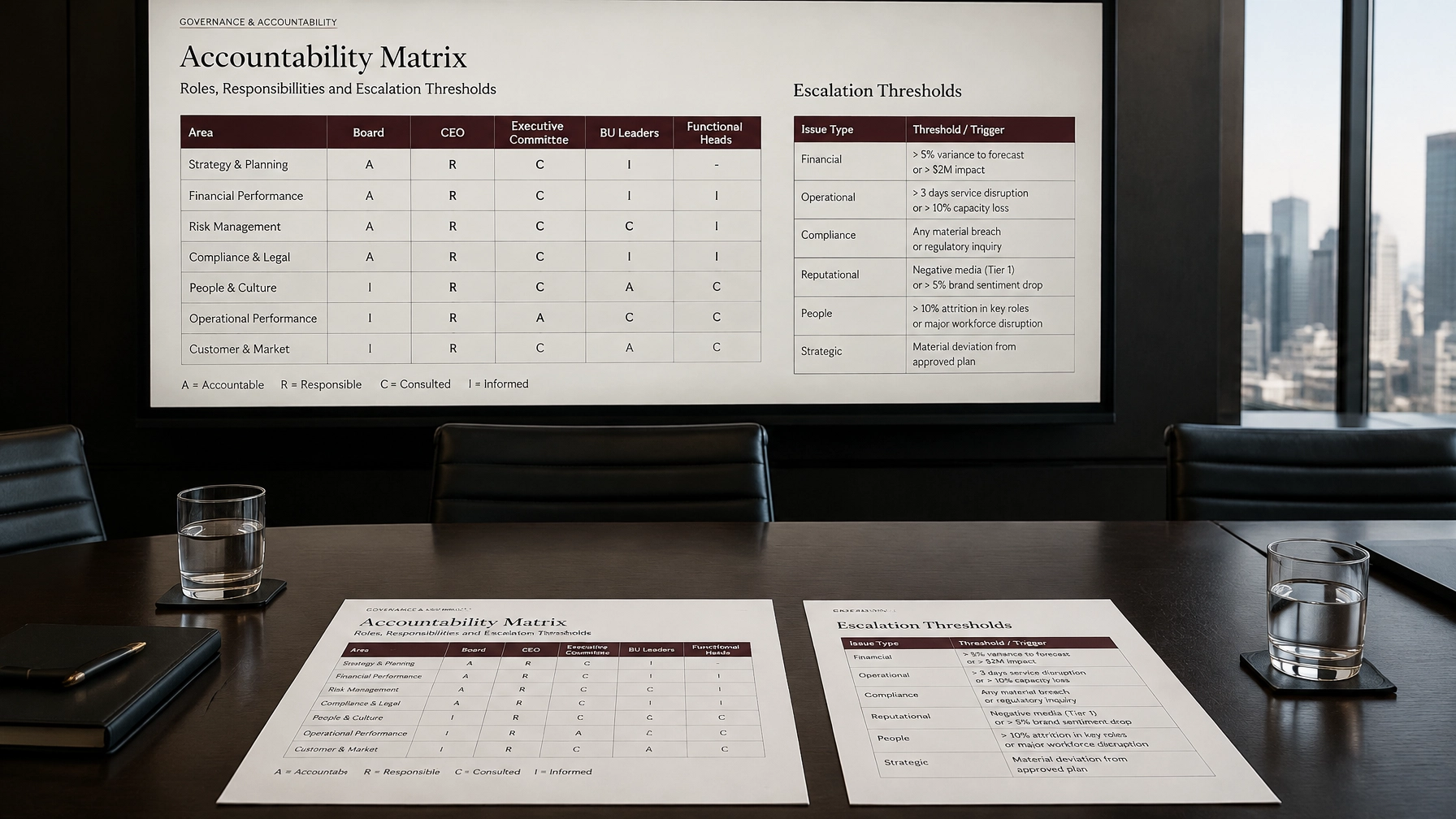
Controls work only when someone is responsible for operating them. The business owner should be accountable for the purpose and day-to-day use. Technical and data owners can describe system behavior, access, and information flows. Compliance, legal, security, and privacy teams provide review within their mandates. A designated decision-maker resolves conflicts and approves exceptions at the right level.
That does not mean every use requires a committee. It means the organization names who can approve a use, who can impose conditions, and who can stop or suspend it. The approval record should identify the scope, conditions, reviewer, and next review point. A generic approval of “AI use” is too broad to guide an employee or support an audit.
4. Make evidence and escalation routine
Monitoring should answer concrete questions: Are required reviews happening? Are users following data restrictions? Are outputs being checked before consequential use? Have complaints, errors, or exceptions appeared? Each signal needs a threshold, a named recipient, and a time-bound response path.
Keep proportionate evidence: the approved use case, review and testing records, access decisions, material changes, exceptions, and corrective actions. Where an issue arises, preserve enough context to understand the output and the decision made from it. This is not a demand to retain every prompt indefinitely; retention should follow the organization’s applicable legal, privacy, security, and records requirements.
The NIST AI Risk Management Framework organizes risk work around Govern, Map, Measure, and Manage. Its value for operators is the connection between governance and the full lifecycle: establish accountability, understand context, assess risk, and act on what monitoring reveals. The framework is a reference point, not a substitute for deciding which controls fit a particular use.
5. Build governance into the stack already in use
AI oversight does not require replacing existing case, compliance, vendor, or workflow tools. It requires connecting their records to consistent ownership, review thresholds, evidence, escalation, and remediation. When those elements sit in separate documents with no operating cadence, exceptions are easy to miss and review becomes a periodic reconstruction exercise.
SignalLane’s emerging-risk governance approach addresses the operating layer: translating obligations and risk signals into repeatable workflows that fit within existing technology. For organizations formalizing accountable AI use, an organizational license request is a selective next step. This content is general business and compliance information, not legal advice.